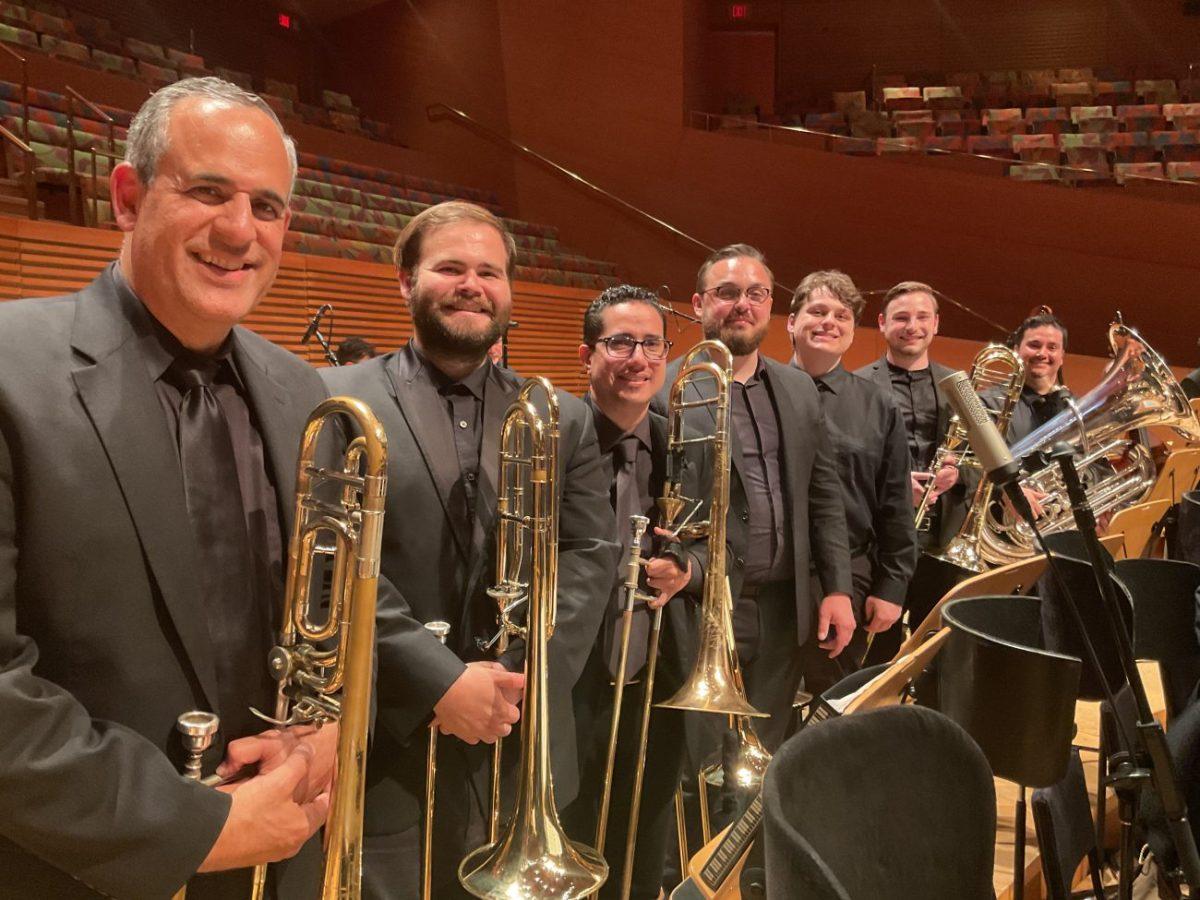
hen I met Jack Whitehouse a few years ago, he was an on-the-quiet side trombonist anxious to find his place in the musically charged environment of the Fresno Summer Orchestra Academy (FOOSA). Three years later, he is still a proud FOOSA participant who says he’s gained a lot of confidence, both musically and socially. (Spoiler alert for Jack’s mom: This story contains a reference to her son attending — gasp — parties in college, so be warned.)
In my story the first time around, I called him The Trombone throughout — and thought I was being very clever. I’m not sure if that too-precious literary conceit aged very well.
When I interviewed him this time around, I promised I would not try to give him a a new nickname.
For best results, read my 2022 interview with Whitehouse first.
Q: When last we spoke, for a 2022 story I wrote in which I repeatedly referred to you as The Trombone, I paired you up in an interview with a FOOSA flute player, Alyssa Santivanez, whom I referred to (in a burst of literary preciousness that seemed quite hip to me at the time) as The Flute. Did my secret plan to assign you a new nickname (“Hey, look, The Trombone is walking across the quad!”) have any success? Did anyone start calling you T,B. for short, or, better yet, Bone? Or did anyone notice/care?
A: I can’t say the nickname stuck outside of teasing from my immediate family, with “Trombone John” and “Sackbut Jack” being the main culprits. As for other people, Jack is still the go-to. Though, when the trombone section is mentioned during a rehearsal, I do tend to be the first one gawked at.
Q: I take it, however, that you are still playing the same instrument. (Although I will refrain in this new story from calling you The Trombone.) In 2022, you had graduated from Bullard High School were starting as a freshman trombone major at the University of Nevada at Reno. How is the college thing going? Are you a Big Man on Campus now?
A: All things considered, this college thing is going great. Lots of new friends, lots of parties I haven’t told my mother all the details to, it’s a pretty good gig. I don’t drift away from the UNR music scene enough to be a “Big Man on Campus,” but I am usually the first trombone people go to when they need something academic played.
Q: Let’s set the scene for Friday, when you and a bunch of other FOOSA participants travel to Disney Concert Hall to perform. What is on the agenda? (Time you leave on buses, where you stay overnight, other itinerary stops, etc.)
A: At 8 a.m., we all go onto three separate buses to make the drive across the Grapevine. We stop at Disney Hall early in the afternoon and after putting our instruments away we break for lunch in downtown. Once the staff have wrangled all the students back to the hall we start our rehearsal at Disney, leading into a short dinner at Colburn followed promptly by the performance at Disney Hall. After a (hopefully) stunning concert, we bus to the SpringHill Suites near LAX. After a late hotel breakfast, we move to The Getty where we spend the afternoon enjoying the non-music side of fine art and history. I tend to use this time to wander about while listening to “Pictures at an Exhibition” (very creative, I know) to get a full sensory experience.
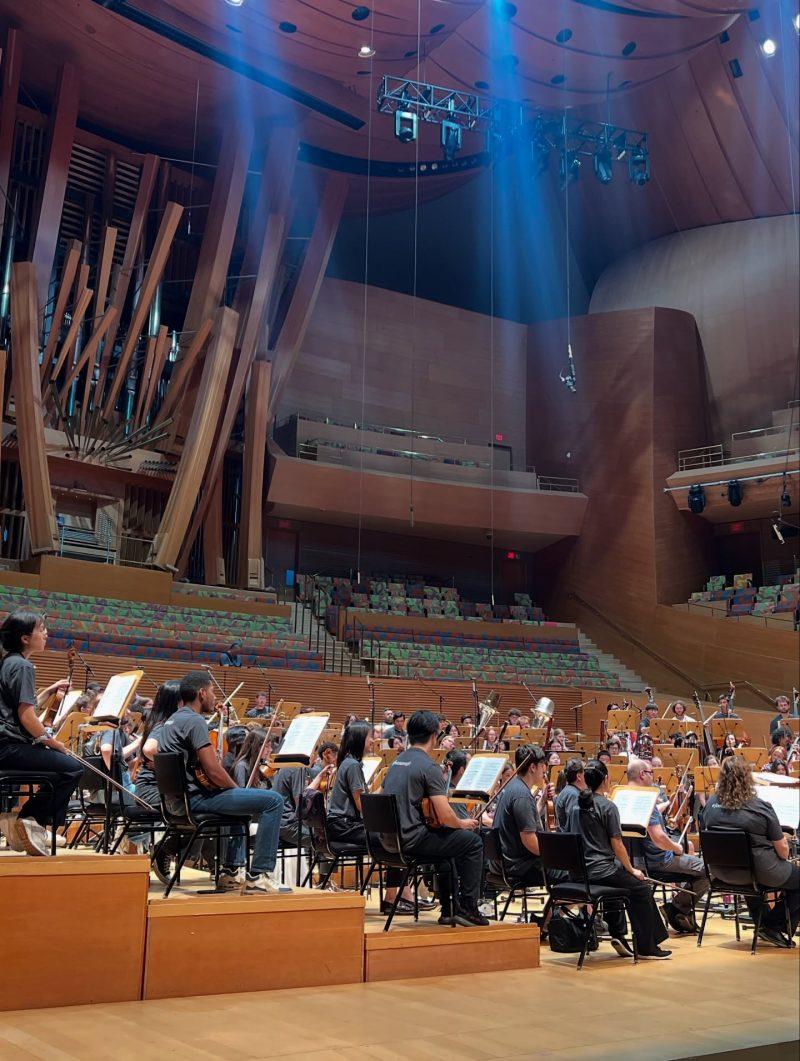
Q: What was it like performing the first time in Disney Concert Hall?
A: I was in awe. Playing on a stage you’ve only seen from the audience is quite the magical experience. The real treat was the quality of sound that the hall produces for the musician on stage. Everything and anything that is played can be heard, good or bad. It is a really rewarding place to play, especially in a world of acoustically obtuse band rooms.
Q: Talk about this year’s program, which the orchestra will be repeating at a public performance in Fresno (4 p.m. Sunday, June 29, Saroyan Theatre). Schoenberg isn’t exactly a breeze — but this is one of his tonal works, right? What have rehearsals been like?
A: I have found that FOOSA programming tends to have one popular piece (“Rite of Spring,” in this case) and one less popular piece (Arnold Schoenberg’s “Pelleas and Melisande)”. Consistently, this festival has given me a greater appreciation for the lesser known piece compared to the more well known one. Don’t get me wrong, “Rite of Spring” is a masterwork in capturing the feel of ancientness and ritualism, but the unstable and fleeting beauty of “Pelleas and Melisande” really speaks to me, especially in this current climate.
Q: One of the great things about FOOSA is the faculty it brings in from all over the world. Who are you working with at this festival?
A: Aside from minor staff room exchanges, most of my time spent working at FOOSA is with Dr. Luis Fred. His quality of teaching is quite enough to get me and the other low brass through the minefield of playing that is this year’s program with little issue.
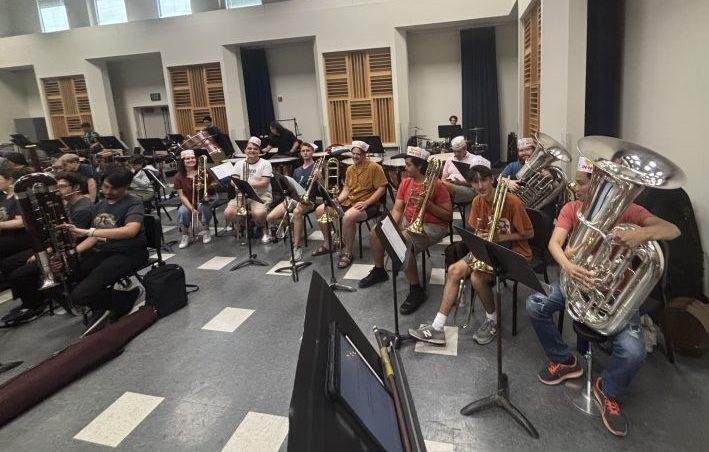
Q: What is your favorite part about participating in FOOSA?
A: My favorite part of FOOSA is actually a combination of working with peers during rehearsal and conversing with peers outside of rehearsal. Seeing the differences (or lack of differences) in how they carry themselves on and off the clock is fascinating to me, and I have found myself making friends in sections I rarely play with, over things that have nothing to do with music.
Q: Do you have any good stories about Dr. Loewenheim (preferably one that would embarrass him but not get him fired?)
A: Aside from the rare accidental baton toss, I have nothing to say that could possibly embarrass him. He is shameless in what he does.
The Munro Review has no paywall but is financially supported by readers who believe in its non-profit mission of bringing professional arts journalism to the central San Joaquin Valley. You can help by signing up for a monthly recurring paid membership or make a one-time donation of as little as $3. All memberships and donations are tax-deductible. The Munro Review is funded in part by the City of Fresno Measure P Expanded Access to Arts and Culture Fund administered by the Fresno Arts Council.
Q: In my 2022 story about you and Alyssa Santivanez , the flute player, you mentioned that you wanted to build more confidence in your playing and in your musical personality. Do you think that FOOSA has helped you do that?
A: FOOSA has absolutely helped me build more confidence. The bravado of Dr. Fred combined with the tenacity that Dr. Loewenheim brings to his piece selection and conducting has brought an almost heroic amount of braveness out of me, both performatively and socially. For that, I am forever grateful.
Q: I also noted that sometimes in larger ensembles, players tend to hang out with their own sections. Have you led the charge for improved trombone-flute relations since that story came out?
A: It remains difficult as ever to commute with the flute section, especially with a sound barrier and bassoon section in the way. I’ve certainly had nice conversations, but nothing that really bridges the gap between sections as a whole. One day, I’m sure.