
On the morning of 9/11, two small-town reporters woke up not realizing that this day would change the world.
And they were certainly not aware they would become the inspiration for a character in a Broadway musical, says Jordan Hayakawa, who plays the role in the national tour of “Come From Away,” which opens Tuesday, Nov. 12, at the Saroyan Theatre, as part of the Broadway in Fresno series.
“One of the things that makes the show so interesting is that it is based on real people and real interviews,” says Hayakwa. We meet the mayor, the police constable, an SPCA worker, and more.
Janice Goudie and Brian Mosher became the composite character of Janice Mosher, who works for a news station in Gander, Newfoundland.
”Even though the show has been running for a really long time, a lot of those people are still very involved in the show, which was a shock to me when we started rehearsals.”
Hayakawa and Brian Mosher follow each other on Instagram.
While you’d be correct in pointing out that Newfoundland is about as far as you could get from New York City and Washington, D.C., it turned out that the airport in Gander was greatly impacted. It was built in a time when airplanes needed a refueling stop before heading over the Atlantic. That meant it had the runways to handle the jumbo aircraft diverted following 9/11. Suddenly the small town was inundated with thousands of stuck passengers.
The stories of some of those townspeople and passengers are intertwined in a heartfelt musical tale that has been charming audiences since the show won the Tony Award for best direction of a musical in 2017.
This second national tour – a non-Equity company that was formed after the first Equity company finished its tour of the nation’s biggest cities – is a big break for Hayakawa, who uses they/them pronouns. They graduated in the spring from Ithaca College in New York.
Originally from Davis, Hayawka has been touring the past several months, visiting such locales as Logan, Utah, where they talked last week in a phone interview.
Hayakawa’s character starts the show on her first day of work reporting for the local TV station.
The Munro Review has no paywall but is financially supported by readers who believe in its non-profit mission of bringing professional arts journalism to the central San Joaquin Valley. You can help by signing up for a monthly recurring paid membership or make a one-time donation of as little as $3. All memberships and donations are tax-deductible. The Munro Review is funded in part by the City of Fresno Measure P Expanded Access to Arts and Culture Fund administered by the Fresno Arts Council.
“In the first scene of the show, she’s meeting the mayor of Gander for the first time, and introducing herself, and she’s really nervous because it’s her first day.”
Those newbie jitters meshed well with Hayakawa’s first weeks on the show, where they had a lot to keep track of in terms of blocking, lyrics and all the other challenges of plunging into a complicated ensemble show.
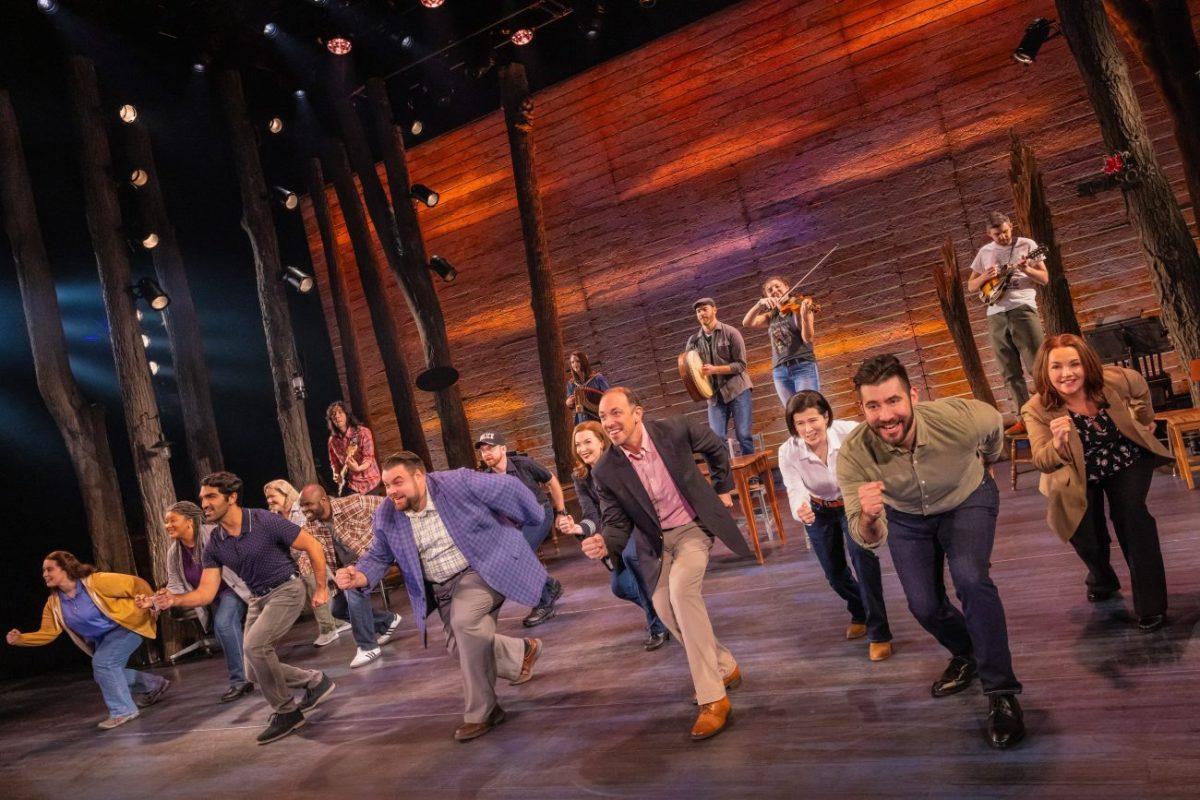
Along with Janice, Hayakawa plays a number of secondary roles as well, including passengers on the big planes that got stuck for several days in Gander. (Eventually, those passengers were able to get off those planes after as much as 30 hours on the ground, and many of them stayed with people in the town, which was how such bonds were formed between them.) One of the clever things about the show is the way that several rows of chairs can become the cabin of a plane, say.
[media-credit name=”Evan Zimmerman” align=”alignright” width=”534″]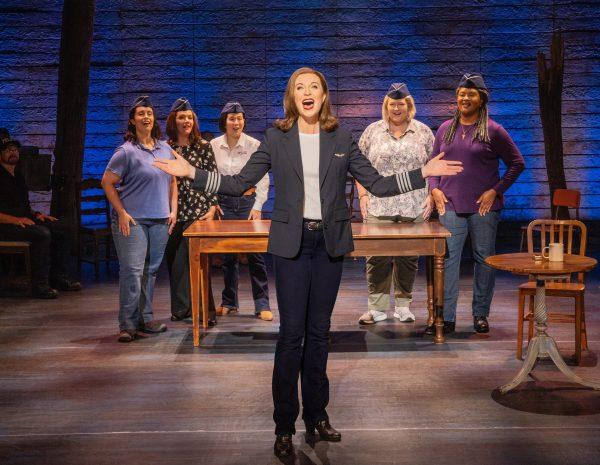 [/media-credit]
Another secondary role for Hayakawa, as a flight attendant, becomes a delight during the song “Me and the Sky,” sung by the character of Bev, the first female captain for American Airlines.
It’s actually one of the few times in the show that Hayakawa gets to take a breather.
“We get to watch Addison, who plays Bev, sing that amazing song, and it’s really fun, because for the first half of it, the flight attendants are just kind of observing, until we kind of decide to jump up and support the story that’s being told, which is really cool,” Hayakawa says.
“Come From Away” is known for its emotional arc. Some audience members cry; a few even sob. But the tears are happier than you’d expect. The 9/11 story is sad, of course. Part of the appeal of the show is the way it riffs on the theme in a way that draws some unexpected joy from the subject matter.
Still, don’t expect to see Hayakawa offering any unexpected tears up there on stage.
“We aren’t allowed to let ourselves indulge in the emotion of it, because then we’re taking it away from the audience,” they say. “You can’t cry when you’re in ‘Come From Away.’ “
That’s because you’re too busy making everyone else cry.