he Fresno Art Museum this weekend is celebrating the opening of four new exhibitions. All will run through June 30. (As the months unfold, I’ll be going into greater depth about most of them.) Let’s take a look with this rundown from the museum:
A taste of Japan
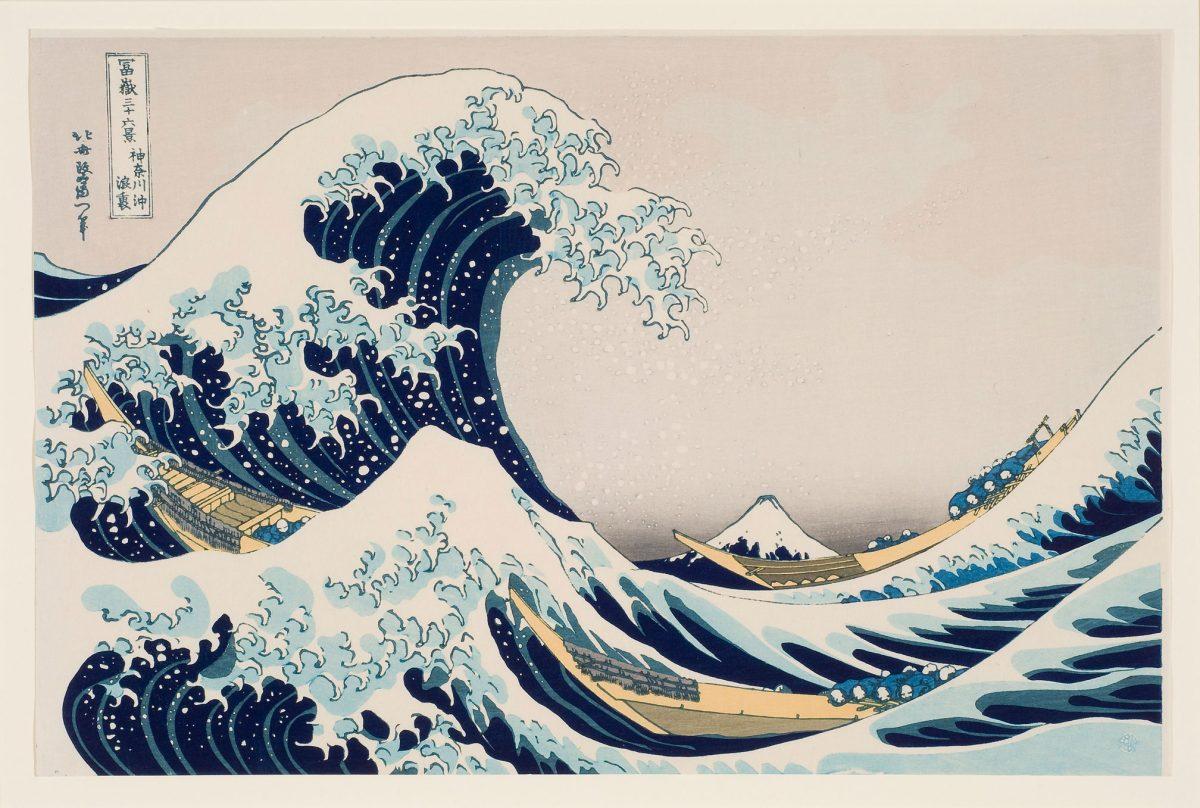
Title: “Fleeting Pleasures: Japanese Woodblock Prints from the Georgia Museum of Art.”
This exhibition of 27 woodblock prints by some of the most influential and well-known ukiyo-e artists explores the culture of luxury and pleasure-seeking that reigned during Japan’s Edo period (1603-1868).
Ukiyo-e is a genre of Japanese art that was popular from the 16th to 19th centuries. The work ukiyo originally expressed the Buddhist concept of the transitory nature of life, but during the Edo period it came to mean embracing the joy of life and its “fleeting pleasures.” The word translates as “to float” and ukiyo-e literally means “pictures of the floating world.”
The Edo Period, when Japan was ruled by the Tokugawa shogunate, was a time of economic prosperity. The merchant class enjoyed a level of affluence previously unknown to them, and they turned their attention to the extravagant luxuries and pleasures that they could now afford.
Woodcuts have been an integral part of Japanese art since 770 CE and were commonly available. In 17th-century Japan, people began buying them in great numbers as they were easily affordable. Traditionally, only the elite were represented in Japanese art, but artists began producing images of more everyday things such as beautiful courtesans and geishas, kabuki actors, and romantic landscapes. For the first time, artists were inspired by the interests of the common people. The prints were mass-marketed, and by the mid-19th century the circulation of the prints ran into the thousands. Prior to World War II, ukiyo-e prints were not considered items of great value because of their abundance, but following the war, they were embraced as an important element of Japanese culture, influential on the history of art, and as valuable works of art in their own right.
My take: I just returned from a trip to Japan and was wowed by the overall traditional artistic aesthetic: the harmony of design, the economy of brush stroke, the keen awareness of nature. I’m looking forward to experiencing these uikyo-e prints.
A first look
Title: “John Willheim: Secret War Photographer.”
Curator: Sarah Vargas, Fresno Art Museum.
When you’re a professional photographer recruited by the CIA, you don’t expect a very big audience for your work because it’s classified. Decades later, the world gets to see Willheim’s photos taken in the ‘Secret War” fought by the Hmong, backed by the CIA, against communist forces in Vietnam. As the chaos of the Vietnam War dominated American news, a shadow war was being fought in neighboring Laos. Since the 1950s, the United States had been involved in Laos, where communism had begun to take hold, with forces backed by North Vietnam. In the early 1960s, CIA officers allied with the Hmong who were already fighting communist forces. The Hmong, a unique tribal group originally from China, amassed a guerilla force which grew to more than 30,000 fighters backed by the CIA. The Hmong fought for their land and their livelihood, but the goal of the CIA was destroying communist supply lines between Laos and Vietnam and tying down North Vietnamese forces. Between 1964 and 1973, the United States dropped 2 million tons of bombs on Laos—more than were dropped on Germany and Japan combined during World War II.
The exhibition offers the first public viewing of the photographs, which depict the everyday life of the Hmong people and their landscape, as well as the brutality of war. One of the most featured figures is a young Gen. Vang Pao (1929-2911), the venerated leader of the Hmong forces.
A resident of Southern California, Willheim chose Fresno, with its large Hmong community with strong ties to the Secret War, as the ideal place to unveil these images.
My take: There’s a journalistic sensibility to these images – Willheim was in a sense “reporting” for his superiors – which provides that wonderful, crackling, “first draft of history” feel. It’s a great “get” for the Fresno museum, especially considering the Hmong connection. I’m curious whether the older Hmong generations who either lived through the war or listened to stories from their parents will be interested in seeing the exhibition. Or are the wounds still raw? And how about younger Hmong generations for whom the war is a distant event?
The Munro Review has no paywall but is financially supported by readers who believe in its non-profit mission of bringing professional arts journalism to the central San Joaquin Valley. You can help by signing up for a monthly recurring paid membership or make a one-time donation of as little as $3. All memberships and donations are tax-deductible.
Selling baseball
Title: “The Art of Selling Bubblegum: Bowman Trading Cards 1933-1955.”
Curators: Jeff Jaech and FAM Curator Sarah Vargas.
The American Baseball Card Museum celebrates the history of the form with this exhibition featuring over 400 trading cards in 47 framed wall displays.
 Trading cards are works of art—drawings, photographs, and colorized photographs—with a commercial purpose. Soon after bubble gum was invented in 1928, Warren Bowman’s Gum, Inc. dominated the market with its “Blony” brand bubble gum. For decades before, cigarette and candy companies had included trading cards with their products. In the 1930s, Gum, Inc. began slipping a trading card in every penny Blony wrapper. With authentic samples from all 49 trading card sets produced by the Bowman companies, this exhibition explores American culture and art reflected in the cards as influenced by the Great Depression, the gangster era, the international conflicts preceding World War II, the Korean War, the beginnings of the Cold War, and the evolution from radio to television. This exhibit also illustrates the improvements in the artwork and printing processes over Bowman’s 22-year history ending in 1955.
In early 1956, Bowman Gum was acquired by the increasingly competitive Topps Gum Company, and so ended the Bowman brand until Topps revived it in 1989.
The American Baseball Card Museum is a tax-exempt organization dedicated to promoting the study and appreciation of American culture, history, and art through baseball cards.
My take: A cool idea to get new audiences to the museum! My first thought is that I want to drag Fresno’s baseball-card king, Mike Osegueda, to the show and get his reaction. What do you say, Mr. Oz?
A story of perseverance
Title: “June Wayne: The Dorothy Series.”
Curator: Sarah Vargas (who must have had an incredibly busy couple of months).
In the mid-1970s, artist June Wayne (1918-2011) began a project documenting the life of her mother, Dorothy Kline. The resulting 20 lithographs use photographs, personal documents, and artifacts to create an intimate portrait of a hard-working and independent woman dealing with the challenges of the early half of the 20th century. Her experiences as an immigrant, a divorcée, a single mother, and a working woman are lovingly explored by her daughter in this visual biography. Though this project was deeply personal to Wayne, it narrates a universal story of perseverance that will resonate with many.
June Wayne was the Fresno Art Museum’s Council of 100 Distinguished Woman Artist for 1988, the year the award program started.
My take: I enjoy when the museum is able to dive into its permanent exhibition and offer a new and interesting take on a local artist.